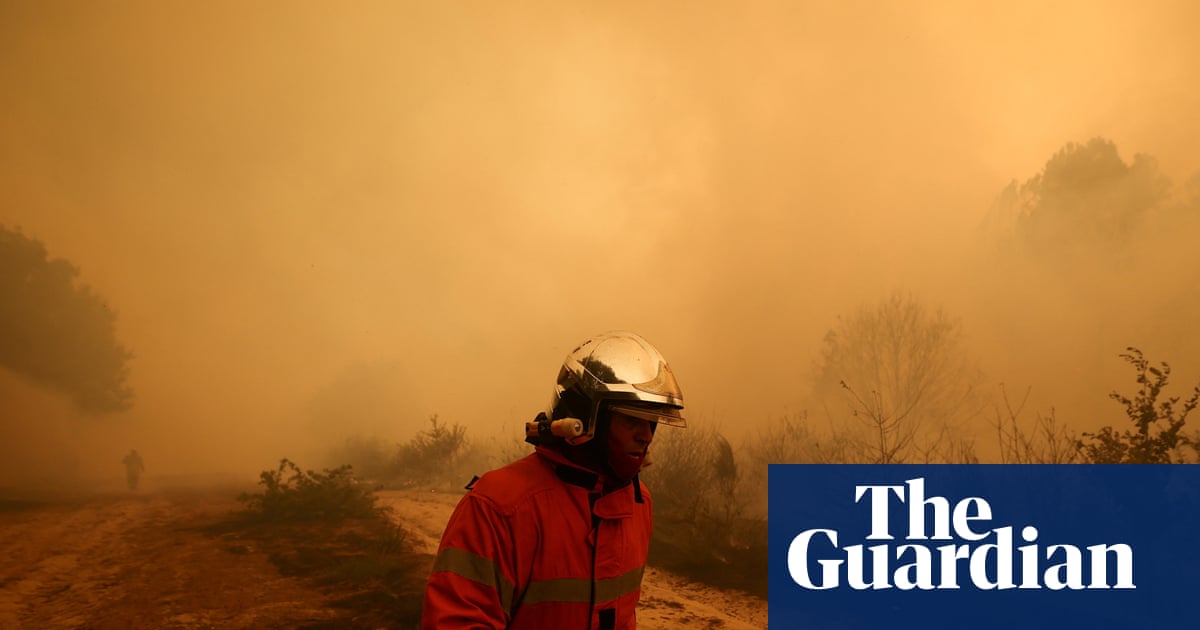
About 90% of wildfires are started by human activity, typically igniting “fine fuels” such as vegetation grass, pine needles, litter and twigs.
And recent weather has almost certainly made ignition far easier.
Drought in western Europe has turned this vegetation – which normally dries after only a few hours of heat and low rainfall – into tinder.
Fine fuel moisture code values climbed above the 96th percentile this month, while France and Spain’s eighth-wettest winters on record left an abundance of fine fuel ready to burn.
Once established, fires can spread into heavier fuels including shrubs, roots and deeper litter if conditions are dry enough.
Heavier fuels also take much longer to dry than fine fuel, but this year’s prolonged dry spell and three record-breaking heatwaves have allowed them to dry substantially.
Winds may have also made the fires harder to predict.
France’s largest blaze, in Gironde, initially spread westwards towards the coast on an easterly breeze before winds abruptly turned westerly on Friday, driving the fire back towards Bordeaux.